
Safe Ways to Remove Earwax at Home in Summer
If you spend your summer weekends in the water at La Jolla Cove or Mission
By: admin | January 19, 2026
After 40, most of us get a bit more serious about taking care of ourselves. You start going to the doctor regularly, maybe get your eyes checked every year, keep tabs on your blood pressure.
But hearing? That usually doesn’t even cross your mind unless something feels obviously wrong. The thing is, your hearing can start changing in your 40s and 50s, and it happens so slowly that you don’t notice.
You just think everyone’s mumbling these days, or restaurants are way too loud now, or your phone speaker isn’t what it used to be. You make little adjustments without realizing that’s what you’re doing.
And here’s why that actually matters. When you’re not hearing as well as you used to, everything takes more effort. You’re working harder to follow conversations, you miss things people say and have to guess at the context, and being around groups of people becomes exhausting instead of fun.
Getting a baseline hearing test and checking in regularly after 40 helps you catch changes when they’re still small, before they start getting in the way of how you live your life.
To understand how we hear, it helps to view the ear as a series of three distinct sections that change sound from a vibration in the air into a signal the brain can process. First, the outer ear acts as a collector. It gathers sound waves from the environment and sends them down the ear canal toward the eardrum. When those waves hit the eardrum, it vibrates, much like the head of a drum would if you tapped it.
These vibrations then move into the middle ear, where three tiny bones take over. Their job is to pick up the movement from the eardrum and make it stronger. This is necessary because the next stop is the inner ear, which is filled with fluid rather than air. Moving fluid takes more energy than moving air, so these bones act as a physical bridge to keep the signal clear.
Inside the inner ear sits the cochlea, which is where the actual translation happens. As the fluid inside ripples, it moves thousands of tiny hair cells. When those cells move, they create an electrical pulse. That pulse travels through a nerve to the brain, which finally identifies the signal as a specific sound.
Recognizing a change in your hearing often happens gradually, making it difficult to pinpoint exactly when the shift began. Because the brain is effective at compensating for small gaps in sound, the initial symptoms of hearing loss frequently appear in specific, demanding environments rather than all at once.
You may want to consider a hearing evaluation if you notice the following patterns in your daily life:
Aging is one of the most frequent causes of hearing loss because the delicate structures of the inner ear simply wear down over decades of use. The microscopic hair cells responsible for translating sound into electrical signals do not regenerate once they are damaged or destroyed.
As these cells weaken, the brain receives less information, which usually manifests as a struggle to hear high frequency sounds or to distinguish speech from background noise. This process is often so gradual that the person affected may not realize their hearing has changed until it begins to interfere with daily conversation.
Long term exposure to loud noise is another primary cause that can accelerate damage to these same inner ear structures. Whether it is a single extremely loud event or years of working in a noisy industrial environment, the physical force of sound waves can overstimulate the hair cells until they stop functioning.
Genetics also play a significant role in determining how resilient an individual’s hearing is. Some people inherit a predisposition that makes their ears more vulnerable to noise or more likely to experience age related decline earlier in life.
Physical issues and certain medications round out the common causes. Physical blockages like earwax impaction or fluid from infections can prevent sound from traveling through the ear, while more serious head injuries can damage the auditory nerve or the tiny bones in the middle ear.
Additionally, some medications are considered ototoxic, meaning they have a chemical makeup that can be harmful to the inner ear. This includes certain high dose antibiotics, chemotherapy drugs and even long term use of specific pain relievers.
Hearing loss can influence how you interact with others each day. You may miss parts of conversations, need others to repeat themselves or feel left out during group activities. Communication can become more tiring, and you might misunderstand instructions at work or in public settings.
Some people even start to avoid social situations because it feels too difficult to communicate. Recognizing these effects can help you find ways to stay connected and maintain your relationships.
Untreated hearing loss often has a significant impact on mental health because it changes how you process the world around you. When it becomes harder to engage in spontaneous conversation, many people experience a sense of frustration or anxiety about being unable to keep up.
This can lead to a steady decline in confidence and a feeling of disconnect from friends and family. Over time, the persistent effort required to follow along can result in emotional exhaustion and a higher risk of developing persistent feelings of sadness or isolation.
The cognitive strain of trying to hear can also affect your mental clarity and memory. When the brain is forced to spend excessive energy deciphering muffled sounds, it has less capacity for storing information or performing complex tasks.
This constant mental fatigue can make you feel overwhelmed even in familiar settings. Addressing hearing changes early can help reduce this cognitive load, allowing you to focus more on the substance of your interactions rather than the struggle to hear them.
Your physical wellbeing is also closely tied to your auditory health. When your brain has to work harder to decode sound, it takes away resources from other functions, which often leads to physical fatigue by the end of the day.
The inner ear plays a critical role in balance as well. Untreated hearing issues can sometimes interfere with your sense of equilibrium, potentially increasing the risk of stumbles or falls.
Maintaining your hearing is not just about sound; it is a vital part of supporting your overall physical safety and energy levels.
Beyond balance and fatigue, there are important safety considerations regarding environmental awareness. Hearing loss can make it difficult to identify the direction of approaching traffic, sirens or household alarms, which may put you at a greater risk in public or at home.
Taking a proactive approach to your hearing health ensures that you remain alert to these important cues.
Establishing a baseline hearing test as an adult provides a vital point of comparison for any changes that might occur later in life.
For most healthy adults between the ages of 21 and 60, experts recommend getting this baseline screening done at least once during a regular physical exam.
If you are under the age of 50 and have no known hearing issues, follow up tests are generally suggested every three to five years to monitor for gradual decline.
The frequency of these checkups should increase as you move into different life stages. Once you reach age 50, it is a good idea to have your hearing checked every one to three years, as age related hearing loss becomes much more common during this time.
By age 60, annual hearing exams are recommended even if you haven’t noticed any significant symptoms, since changes can often be too subtle to recognize on your own.
Individuals who already have a confirmed hearing loss or use hearing aids typically need to return for an evaluation once a year. These annual visits allow for adjustments to your devices and ensure that they continue to meet your needs as your hearing evolves.
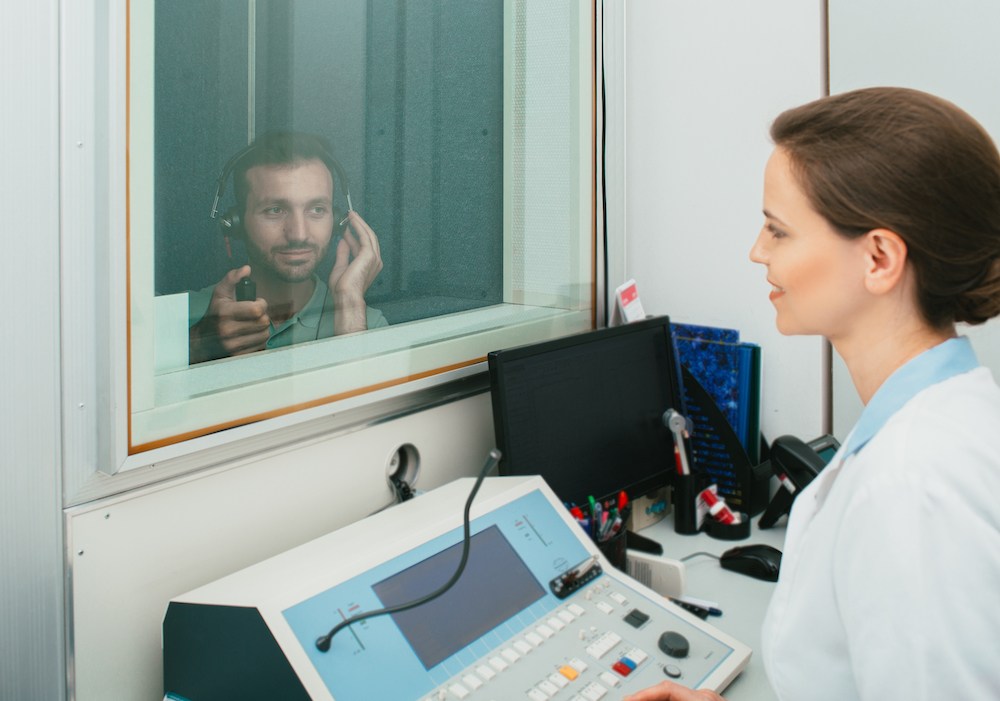
During a standard hearing test appointment, your audiologist will ask about your health history and any changes you have noticed in your hearing. You may be asked about noise exposure, family history or specific situations where you have trouble hearing.
You will then wear headphones and listen to a series of tones or words at different volumes and pitches. You will be asked to respond when you hear each sound. The results show how well you hear across different frequencies and help identify any patterns in your hearing.
When you finish a hearing evaluation, the results are usually plotted on a graph known as an audiogram.
Your results indicate the softest level at which you can hear each pitch, helping to pinpoint exactly where your hearing is strongest and where it might be flagging.
Results also typically include a word recognition score to evaluate how clearly you can understand speech when volume is not a factor. This distinction is vital because it clarifies whether you simply need sounds to be louder or if the clarity of the signal itself has been compromised.
Specialists use these detailed findings to create a customized plan for your auditory health. If a hearing loss is identified, the specific curves on your audiogram guide the precise programming of any supportive technology, like hearing aids.
Preserving your hearing health is a lifelong process that often comes down to the small, consistent choices you make every day. While age naturally affects the ears, adopting a few proactive habits can significantly reduce the wear and tear on your auditory system. Taking these precautions now helps ensure that you can continue to engage fully in conversations and enjoy the sounds around you for a long time.
You can support your long term hearing health by incorporating these simple protective measures into your daily routine:
Staying aware of your hearing health after 40 helps you continue enjoying conversations, activities and connections with those around you. Regular hearing tests allow for early detection and care before changes start to affect your daily life. If you have noticed signs like needing higher volume or missing parts of conversations, consider scheduling a checkup.
The team at ChEARS Hearing Center in San Diego, CA is available to answer your questions and support your hearing health. To learn more or book an appointment, contact us at (619) 717-2601.
Tags: audiogram, how-to guides, speech tests

If you spend your summer weekends in the water at La Jolla Cove or Mission
By: admin | July 26, 2026
San Diego knows how to put on an event. Between the street fairs, music
By: admin | June 25, 2026
After 40, most of us get a bit more serious about taking care of
By: admin | January 19, 2026